Clinical Presentation, Diagnosis and Staging of Breast Cancer
Diagnosis combines clinical assessment, imaging, and tissue testing. Staging describes extent and helps build an individual treatment plan.

The key things to know
- A biopsy usually confirms the diagnosis.
- Clinical and pathological stages can differ.
- Not every early cancer needs extensive body scans.
Changes that need assessment
A new breast or underarm lump, skin dimpling, persistent redness, a newly inverted nipple, or spontaneous bloody discharge warrants medical assessment. Many breast changes have non-cancerous causes, but appearance alone cannot distinguish them. Symptoms may be painless, and a recent normal mammogram does not rule out a new problem. Rapid widespread redness or swelling needs timely evaluation.
The diagnostic pathway
The clinician reviews symptoms and risk history and examines the breasts and nearby nodes. Imaging is selected according to the clinical situation. A core-needle biopsy usually provides tissue when a finding is suspicious; the sample is examined by a pathologist. Occasionally more sampling is required when imaging and pathology do not agree. Ask when the result will be available and who will explain it.
What staging includes
The TNM system describes the main tumour, regional lymph nodes, and distant spread. Breast cancer staging also uses features such as grade and hormone-receptor and HER2 results. Clinical stage is estimated before treatment; pathological information after surgery may refine it. Additional body scans are ordered when indicated by symptoms or disease features, not automatically for every small early cancer.
From results to a plan
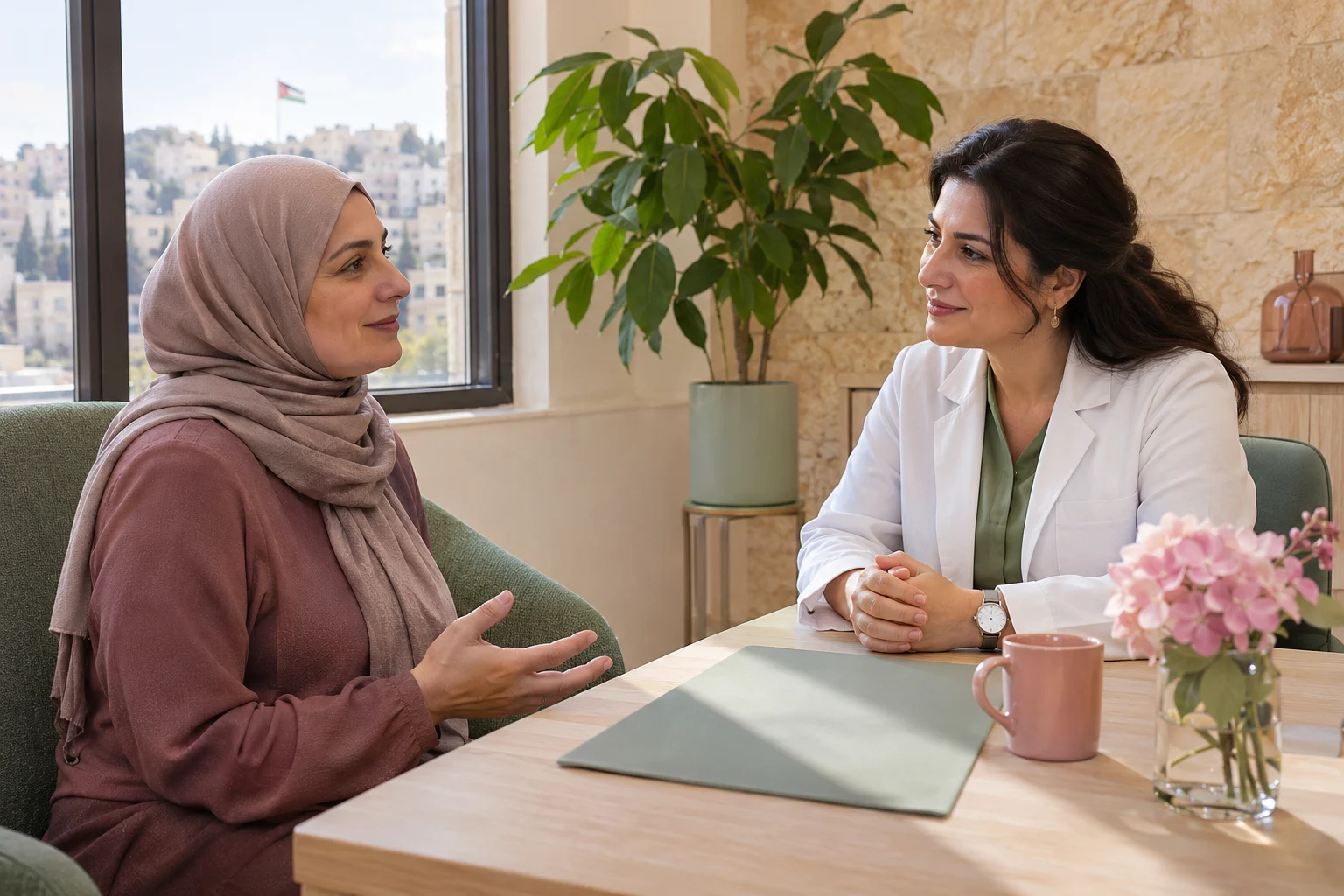
A multidisciplinary team connects the findings to treatment options. Some people start with surgery; others benefit from medicines first. Stage is important, but it is not the only factor and is not a personalised prediction of survival. Keep copies of reports, list questions, and consider bringing someone you trust to the appointment. You can ask for an explanation in Arabic.
Take these questions to your appointment
- Which results are still pending?
- What is my stage, and what would change the treatment sequence?
Sources & review
This is original educational content based on the sources below, not reproduced textbook material. Website supervisor: Dr. Nizar Ismail. Individual medical review of this article is pending.
- NCI: How Is Breast Cancer Diagnosed? ↗
- NCI: Breast Cancer Stages ↗
- NCI: Tests for Breast Cancer Biomarkers ↗
This information cannot replace diagnosis or a personal treatment plan. Consult your care team about symptoms or decisions about your treatment.