Physiology and Developmental Stages of the Breast
The breast changes throughout life. Knowing which changes are expected helps you notice those that need assessment.
The key things to know
- Hormones change breast tissue throughout life.
- Persistent symptoms deserve examination at any age.
- Pregnancy and breastfeeding do not exclude cancer.
From puberty onward
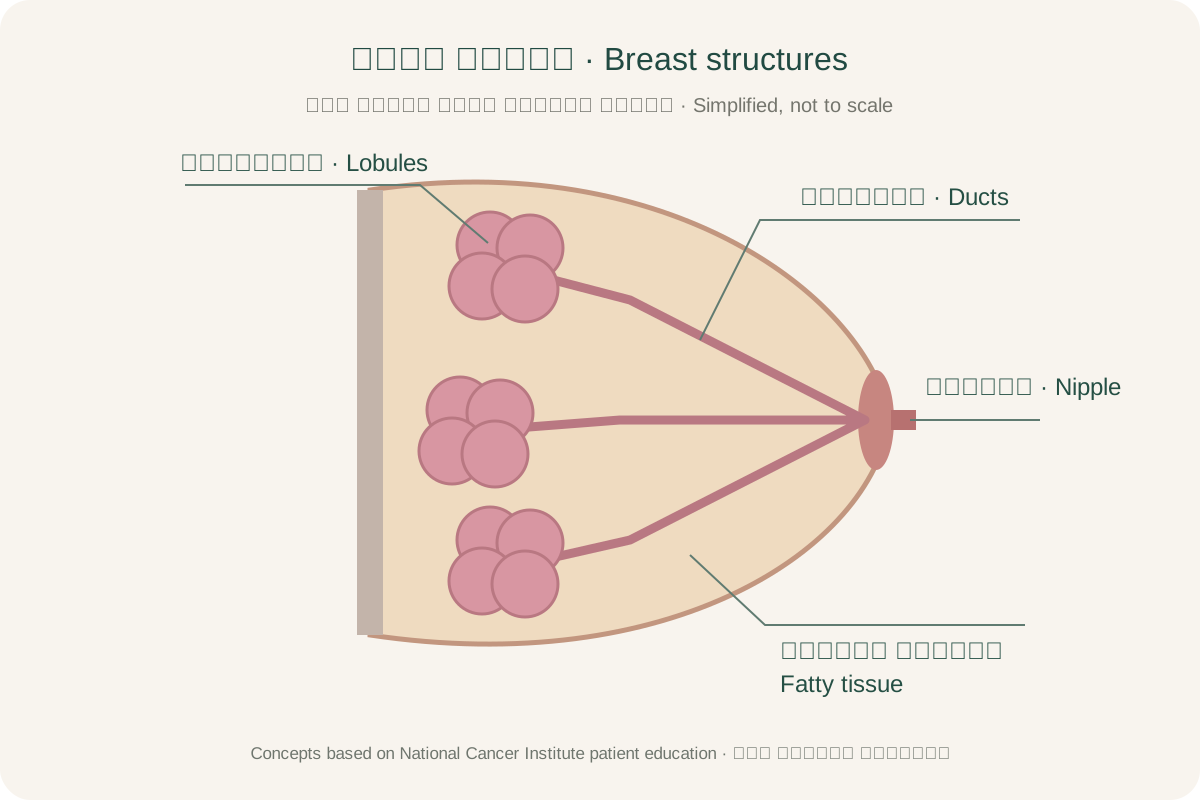
Hormones stimulate the growth of ducts and other breast tissues during puberty. Development is gradual, and one breast may grow before the other. Some difference in size or shape is common. Breast development does not follow an identical timetable for everyone. Marked, new, or rapidly changing asymmetry deserves a clinical assessment rather than comparison with photographs or other people.
Menstrual-cycle changes
Estrogen and progesterone influence breast tissue during the menstrual cycle. Some people notice fullness, lumpiness, or tenderness before a period, followed by improvement. Keeping a brief symptom diary can help your clinician understand the pattern. A new discrete lump or a change that persists should not simply be attributed to hormones without examination.
Pregnancy and breastfeeding
Pregnancy prepares the milk-producing tissue for feeding. After birth, prolactin supports milk production and oxytocin helps milk move through the ducts. Breasts may feel fuller or change in size. Breastfeeding-related inflammation can cause pain, redness, and fever; obtain medical advice promptly for these symptoms or for a persistent lump. Being pregnant or breastfeeding does not rule out breast cancer.
Menopause and later life
After menopause, lower hormone levels commonly reduce glandular tissue while the proportion of fat increases. Breasts may feel softer or change shape. Hormone medicines can also affect tenderness and density. Normal ageing does not explain every new symptom. Continue an age- and risk-appropriate screening plan and discuss new focal pain, a lump, discharge, or skin changes.
Take these questions to your appointment
- Does my symptom follow a hormonal pattern?
- Which imaging is suitable while pregnant or breastfeeding?
Sources & review
This is original educational content based on the sources below, not reproduced textbook material. Website supervisor: Dr. Nizar Ismail. Individual medical review of this article is pending.
This information cannot replace diagnosis or a personal treatment plan. Consult your care team about symptoms or decisions about your treatment.